Perspectives
The 3 S's of Industrial War: Speed, Scale, Sustainment

As American civilians, we see our warriors — the best-trained, best-equipped fighting force the world has ever known — and we feel assured. On the news, we see carrier strike groups cutting through the ocean, F-35s screaming overhead, and special forces operators executing missions with extreme precision. We look at all of this and think: of course we'll win.
It's the same feeling you get watching a Broadway production or the latest Hollywood film. The audience enjoys the final product — the lights, the sounds, the beautiful performance — and marvels at it. What the audience doesn't see is the eighteen months of rehearsal, the painstaking sourcing of the right talent, the right sets, the right costumes, the coordinated logistics of moving hundreds of people and thousands of props into position hour after hour. The audience doesn't think about the production. They just enjoy the show.
The American people are the audience. And too many of us are watching the show without any understanding of what it takes to keep it running.
The reality of war
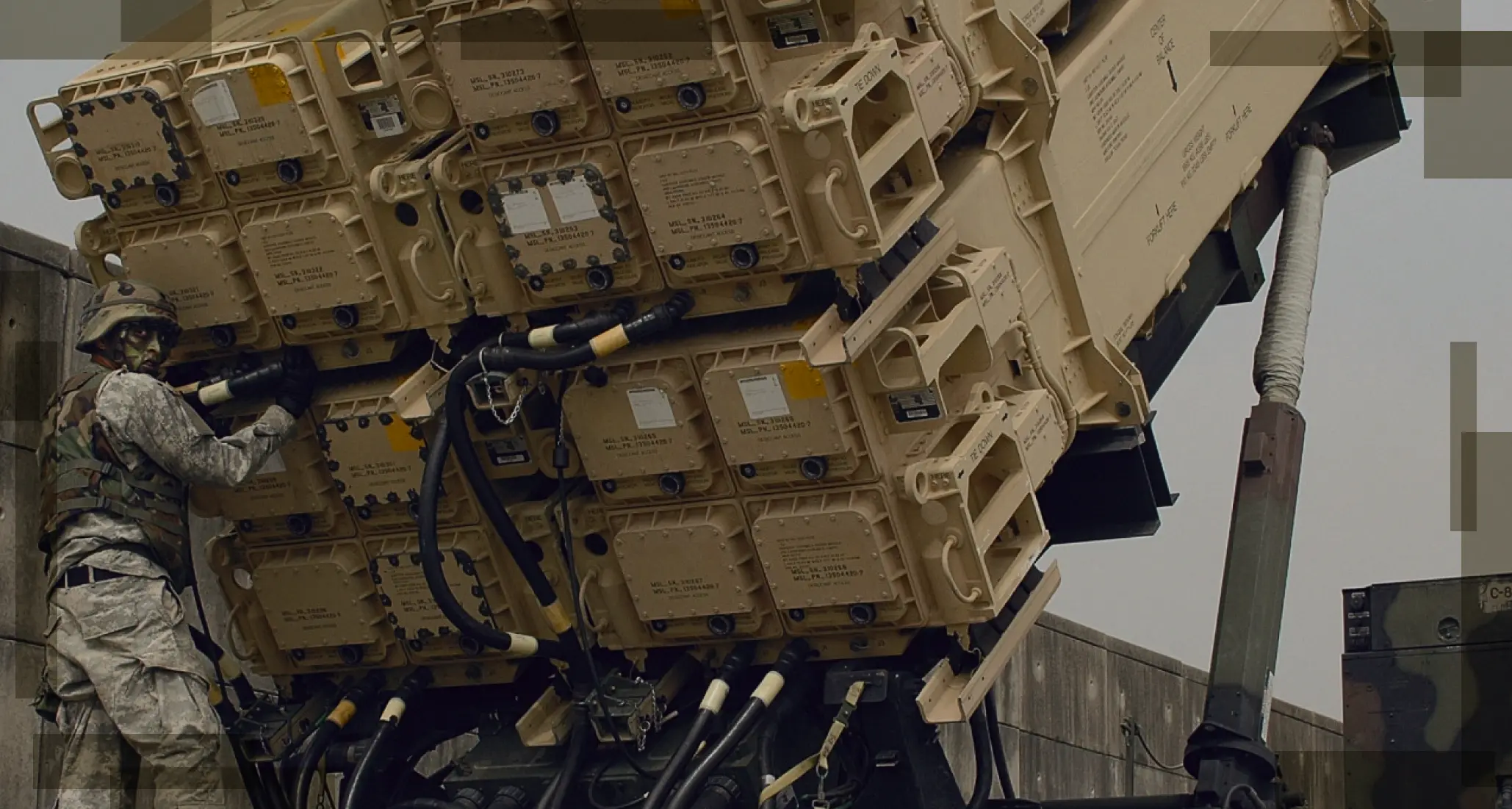
As the Wall Street Journal reported on March 1, 2026, the U.S. military is racing to destroy Iran's missile and drone capabilities before it runs out of interceptors to defend against Tehran's retaliation. During the 12-day Israel-Iran conflict in June 2025, U.S. forces expended more than 150 THAAD interceptors — roughly one-quarter of the global inventory. We produce about 12 per year. Replenishing the stockpile could take three to eight years. As America uses her hard-won munitions, China sits patiently, knowing that we will struggle to replenish our stockpiles.
In wargame after wargame simulating a conflict with China over Taiwan, the U.S. runs out of critical anti-ship missiles within the first week and long-range cruise missiles within a month. A Heritage Foundation study concluded that American forces would reach a breaking point within 30 to 60 days while China could sustain operations for months longer. And the 155mm artillery shell — the most basic building block of conventional warfare — tells us we can't build fast enough either: the Army's goal of 100,000 rounds per month has been pushed back repeatedly, with actual production at roughly 40,000.
We do not have enough munitions to fight the wars we might actually have to fight. These are Speed problems, Scale problems, and Sustainment problems — all at once, across multiple theaters. There is a way to think about this clearly.
The 3 S's
Here is the uncomfortable reality: wars are ultimately won by the industrial base that feeds, clothes, arms, and sustains our fighters over time. Supporting our troops means food, water, boots, body armor, night vision, radios, ammunition, missiles, spare parts for vehicles, spare parts for aircraft, fuel, tents, portable infrastructure, and thousands of other items most people never think about. Our domestic industrial base must deliver all of it — not in peacetime, but in wartime, when everything is needed immediately, in enormous quantities, for an indefinite duration.
This is the common framework I've been refining over the past several months in speaking with members of our government. To maintain American dominance on the battlefield, our defense industrial base must deliver on three dimensions, what I call the 3 S's:
Speed. How fast can we ramp production when the moment demands it? Peacetime efficiency is not the same as wartime readiness. The question is not how well our factories perform on a Tuesday in March — it's how fast they can shift from steady-state to surge when the call comes down.
Scale. Can we produce enough? Not prototype quantities nor enough for the occasional skirmish. Volume sufficient for a prolonged, multi-theater conflict against a near-peer adversary. The kind of volume that fills cargo ships and burns through inventories faster than anyone in peacetime wants to imagine.
Sustainment. Can we keep it going? Wars are not sprints but marathons: grinding, exhausting, resource-consuming campaigns that stretch for months and years. The industrial base must be able to endure under sustained pressure — maintaining output, replenishing stockpiles, and adapting to changing requirements — for as long as it takes to win.
When America actually did this
There is a precedent for what I'm describing. I hear it at every conference we attend.
Before Pearl Harbor, Roosevelt had already been planning for wartime industrial conversion for roughly two years. Even so, production did not peak until late 1943. Two years of pre-war planning. Two more years to reach peak production. Four years total — with idle factory capacity, an unemployed workforce, and a fire hose of federal money. Conditions far more favorable than what we face today.
Factories across America converted from civilian to military production. Mattatuck Manufacturing in Waterbury, Connecticut, went from upholstery nails to three million cartridge clips per week. Ford's Willow Run plant was retooled to build B-24 Liberator bombers. One figure stands out: Charles Erwin Wilson — “Engine Charlie” — became president of General Motors in 1941 and directed GM's wartime conversion. Between 1941 and 1945, GM produced one-fourth of all U.S. tanks, armored cars, and airplane engines, and one-half of all machine guns and carbines. Wilson earned the Medal for Merit from Truman in 1946; Eisenhower later selected him as Secretary of Defense. He happens to be a close friend's great-grandfather — a reminder that defense industrial resilience is built by real people making real decisions under extraordinary pressure.
Could we do it again?
As I wrote in Beautiful Systems, our company manifesto, most American factories operate on a jumble of disconnected data systems, outdated software, and tribal knowledge, leaving operators to make critical decisions through gut instinct rather than quantitative rigor. The surge capacity America had in the 1940s has been hollowed out — and the decision-making infrastructure inside the factories we still have isn't equipped to rebuild it.
Billions have been appropriated. Contracts have been signed. A new generation of defense technology companies is taking the manufacturing problem seriously — Anduril designing hardware for the factories we have rather than the ones we wish we had, Re:Build acquiring and revitalizing domestic manufacturing facilities from the ground up. These are real steps. But if you don't know when to ramp, how fast to ramp, and where the bottlenecks will emerge, you're still guessing. And in a conflict against a near-peer adversary, guessing is what gets people killed.
This is not just a capacity problem. It is an operational intelligence problem. We don't just need more factories — we need factories that understand themselves, and the ability to simulate a surge before we attempt one.
Making the 3 S's calculable
Speed, Scale, and Sustainment are not just strategic buzzwords. They are engineering problems. They can be modeled. They can be simulated. They can be optimized — before the first shot is fired.
This is what drives us at ProDex Labs. We build the simulation and algorithmic decision-making tools that allow defense manufacturers to understand their production systems deeply enough to plan for wartime scenarios with precision. We work with companies like L3Harris on ramp simulations — modeling how new product introduction and existing brownfield facilities can be accelerated, identifying constraints before they become crises, and stress-testing production plans against realistic demand signals.
The goal is straightforward: by the time a conflict demands rapid industrial mobilization, the bottlenecks should already be mapped. We should know, with algorithmic confidence, what it takes to go from where we are to where we need to be. The WWII mobilization succeeded in part because Roosevelt spent years planning before Pearl Harbor — and it still took two more years to reach peak output. The 155mm ramp-up is struggling today because we didn't have these models before Ukraine forced our hand. We cannot afford to keep learning these lessons in real time. This is how we compress that timeline — and how we stop being surprised by the math of our own supply chains.
The stakes
Let me bring it back to the metaphor.
The American people are the audience. They see the show — our military strength, our technological prowess, our global reach — and they feel safe. But the show only works if the production behind it is funded, staffed, planned, and rehearsed. The sets need to be built. The props need to be sourced. The understudies need to be ready.
Right now, our production is under-resourced and under-planned. We have brilliant performers on stage, but the backstage operation — the industrial base that keeps them supplied and sustained — is not where it needs to be.
American battlefield dominance depends on what happens in factories, planning rooms, and simulation environments long before the first shot is fired. The 3 S's — Speed, Scale, Sustainment — are the framework for getting there. And the time to start building toward them is not when the curtain goes up.
It's now.